Leadership and Innovation
Degrees

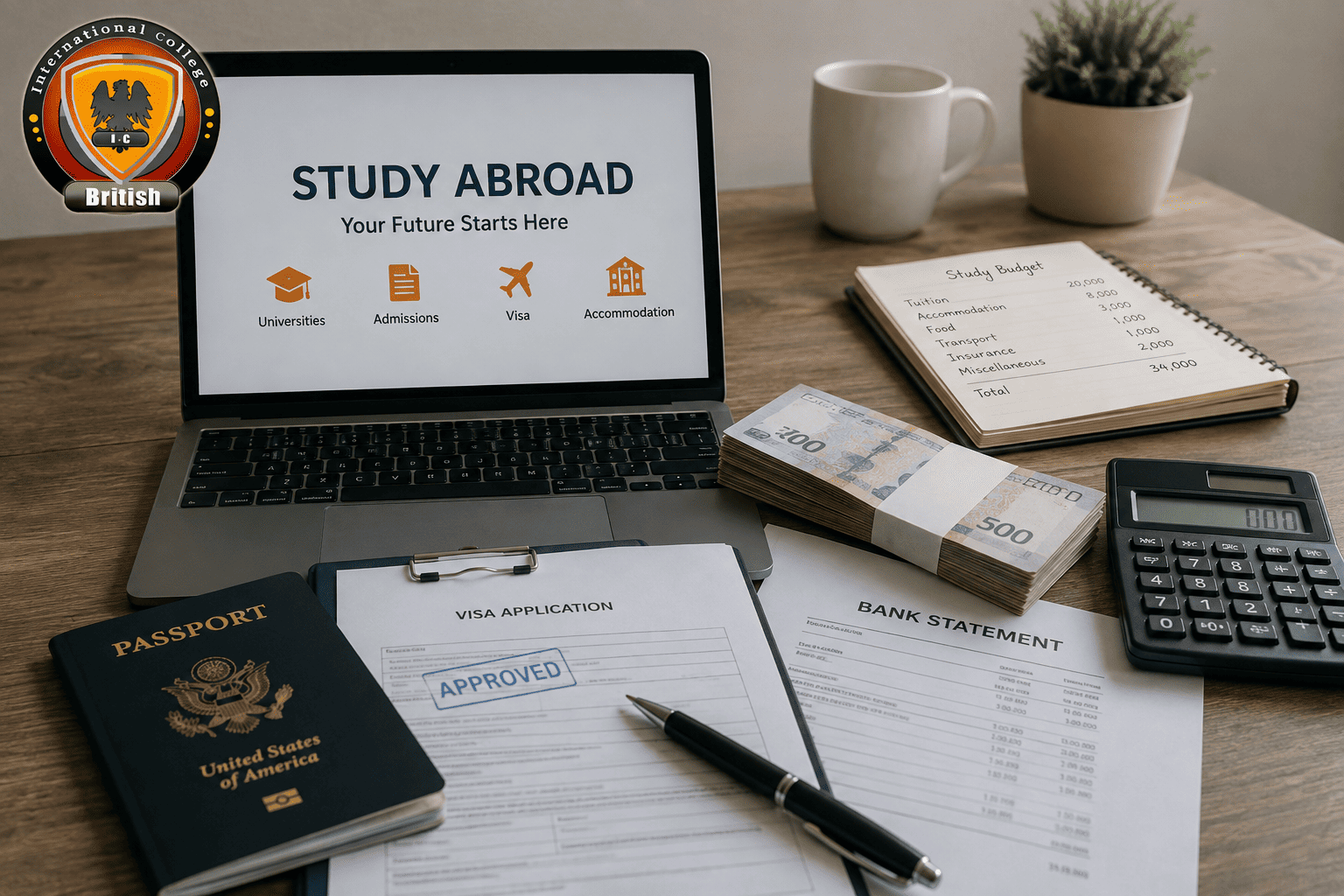
Proof of funds for an international student visa requires verified liquid assets covering the first full year of university tuition plus country-specific living allowances. Immigration authorities strictly accept unencumbered bank balances, government-approved education loans, and formalized sponsorships held for the mandatory maturation window (typically 28 consecutive days). For applicants navigating cross-border transfers from the MENA region, mitigating currency volatility and documenting sudden deposits are paramount to preventing immediate visa rejection.
Securing unconditional admission is merely half the battle; securing a study visa requires clear documentation of international student visa funds. Visa consular officers evaluate financial submissions through a risk-mitigation lens to verify that an applicant will not experience destitution or breach visa working hour limits.
Every destination calculates financial sufficiency using two baseline criteria: first-year tuition costs and a standardized cost-of-living stipend.
Tuition Fees: Must match the exact gross balance declared on your official offer letter (e.g., the US Form I-20, the UK Confirmation of Acceptance for Studies (CAS), or the Canadian Letter of Acceptance), minus any documented, non-refundable deposits already cleared.
Cost of Living Requirements: Immigration bodies designate a non-negotiable baseline to cover 9 to 12 months of housing, food, transport, and insurance.
The Golden Formula:
Total Required Liquidity = (First-Year Tuition - Cleared Deposits) + Mandated Living Expenses + Round-Trip Travel Buffer
Not all wealth constitutes valid proof of funds college MENA applicants can rely on. Visa officers exclusively demand liquid assets—capital readily accessible within business days without legal encumbrance.
|
Asset Category |
Acceptable Instruments (Approved) |
Unacceptable Instruments (Rejected) |
|
Cash Deposits |
Personal savings accounts, current accounts with immediate withdrawal access. |
Post-dated cheques, speculative cryptocurrency wallets, foreign cash holdings. |
|
Loans |
Sanctioned education loans from accredited national or international commercial banks. |
Informal personal loans, credit card lines, peer-to-peer microloans. |
|
Investments |
Matured fixed-term deposits with explicit penalty clauses permitting early withdrawal. |
Active equity shares, unvested mutual funds, derivatives, corporate shares. |
|
Real Estate & Physical Goods |
N/A (Cannot serve as primary visa proof). |
Land valuations, vehicle ownership deeds, gold jewelry appraisals. |
Navigating student visa requirements from the MENA region involves strict oversight of local banking systems, source-of-wealth documentation, and cross-border currency adjustments.
United States (F-1 Visa):
Requires showing liquid funds covering the full estimated cost on the Form I-20 for Year 1, alongside demonstrated feasibility to finance the remaining degree.
Requires bank statements from the sponsor, an Affidavit of Support (Form I-134), and employer salary certificates.
United Kingdom (Student Route):
Strict adherence to Appendix Finance rules. Funds must sit untouched in an approved bank for a minimum continuous 28-day holding period.
The official bank statement or letter must be dated within 31 days of the visa application date.
Canada (Study Permit):
Demands proof of Year 1 tuition alongside the updated cost-of-living standard.
The purchase of a Guaranteed Investment Certificate (GIC) from a qualifying Canadian financial institution provides the strongest evidence of financial capability.
Germany & Continental Europe (National Visa):
Demands a government-regulated Blocked Account (Sperrkonto) funded prior to the consular appointment, guaranteeing calculated monthly stipends.
For students financing degrees from countries experiencing foreign exchange volatility (e.g., Egypt, Lebanon, or non-pegged currencies), currency conversion risks can undermine a visa filing:
Incorporate a 10% Currency Safety Buffer: Always maintain at least 10% to 15% above the required threshold converted into USD, GBP, or EUR. If the local currency drops relative to the destination currency on the date the visa officer reviews the file, the application remains solvent.
Do Not Break the 28-Day Chain: Even a 24-hour dip below the mandatory balance resets the holding window to Day 0. Disable automatic bill payments or scheduled debits on the qualifying account.
Dual-Currency Account Statements: Request bank statements that explicitly state the closing balance in both local currency and the destination currency (USD, GBP, or EUR) using the central bank’s daily official exchange rate.
Financial discrepancies constitute the single highest driver of student visa refusals. Consular fraud units meticulously cross-reference account histories to detect artificial liquidity.
Sudden, large deposits made immediately before generating a bank statement are universally flagged as "parked funds"—money borrowed temporarily to simulate wealth.
Audit Defense: Every lump-sum credit must have an authenticated paper trail. If a family asset (e.g., real estate or a business stake) was liquidated to fund the account, attach the notarized sales contract, tax returns, and the official transfer receipt showing the movement from buyer to account holder.
Salary Correlation: The accumulating balance must logically match the sponsor's documented monthly income, professional title, and tax filings.
When funding relies on third-party family sponsors (parents, legal guardians):
Proof of Relationship: Provide certified, government-issued birth certificates and civil family records proving the linear relationship between the applicant and the sponsor.
Affidavit of Financial Support: A notarized, legal affidavit signed by the sponsor, explicitly stating their commitment to cover all academic and personal liabilities for the duration of the program.
Certified Legal Translations: All documentation in Arabic, French, or other regional languages must be accompanied by an official, sworn translation executed by an accredited translation agency. Self-translations are systematically rejected.
Avoid costly delays, missed academic start dates, and administrative rejections caused by financial documentation errors.
Request an official, updated cost-of-attendance schedule from your university's admissions office.
Schedule an appointment with your banking institution to issue certified statements formatted to consular specifications.
Audit your financial portfolio with a certified international education advisor prior to final submission.
Take Action: Ensure your financial documentation is aligned with target embassy regulations before booking your visa interview appointment. Check your program deadlines and begin your 28-day holding period now.
It is considered one of the largest universities, as it has more than 65 accredited training programs. The student in the program obtains internationally accredited certificates and is certified by the study embassy What distinguishes our university from other universities in Britain is the large number of accreditations it enjoys, which makes it at the forefront of international universities that organize professional programs. It is a member of the UK Register of Centers for Education Providers (UKRLP) Search with registration number 10065749. It is also a member of the list of accredited non-governmental organizations of the Economic and Social Council of the United Nations, and also a registered member of the European Union's Transparency Register under the number TR-Q-2017-22003.

internationalcollege-online