
Leadership and Innovation
Degrees

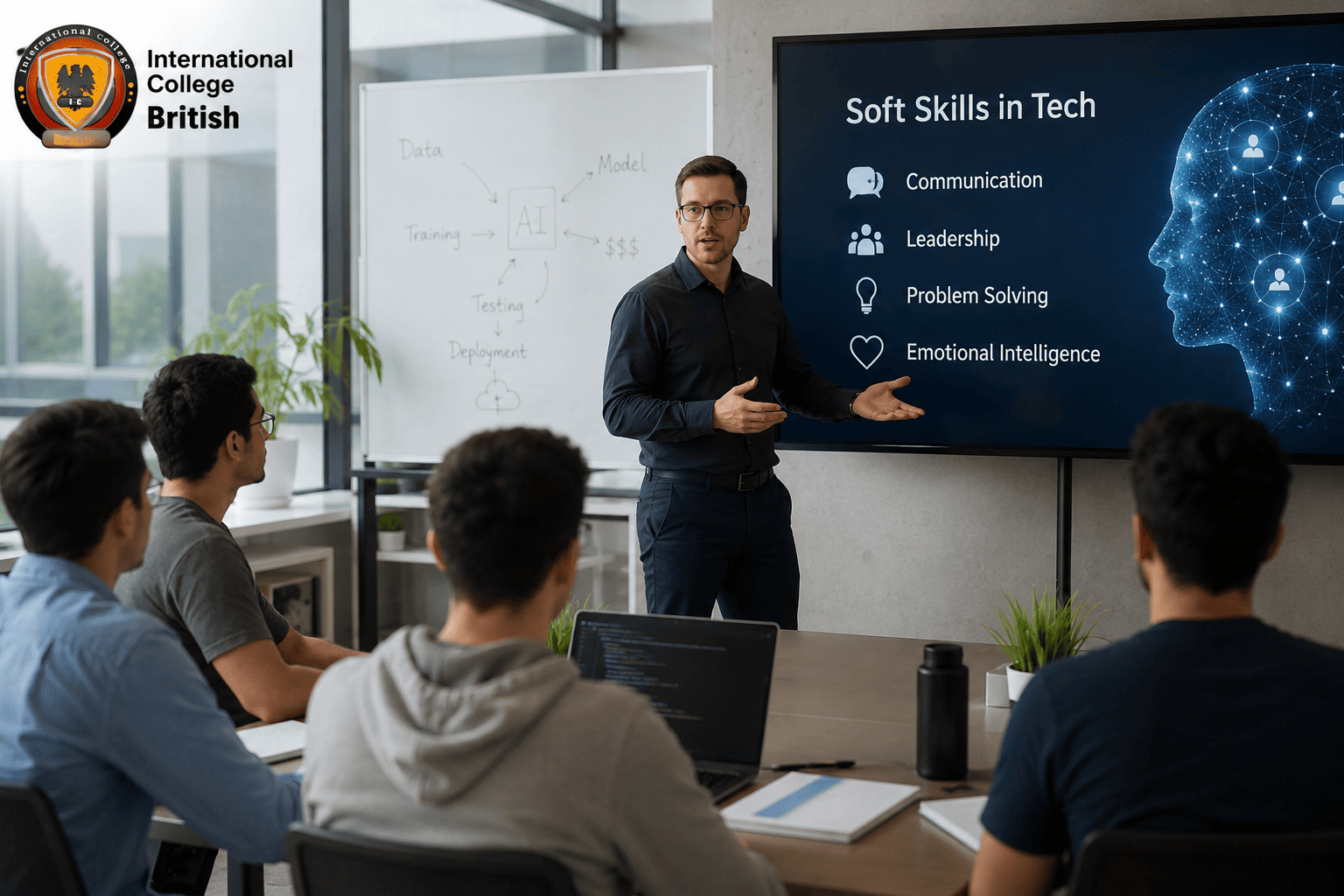
While artificial intelligence and automation dictate modern industry capabilities, human-centric competencies remain the ultimate market differentiator. Integrating a robust soft skills college curriculum directly addresses the human-element gap in AI-era education. Securing degrees that prioritize critical thinking, emotional intelligence, and complex communication is the most effective strategy to future-proof careers and alleviate admissions anxiety regarding technological displacement.
The integration of advanced technology into global markets has fundamentally altered academic requirements. Technical proficiency is no longer a unique selling proposition; it is a baseline expectation. The true premium in the modern workforce lies in the human elements that algorithms cannot replicate: strategic leadership, nuanced negotiation, and cross-cultural communication.
Academic institutions are aggressively pivoting their Global Curriculum frameworks. The primary objective is addressing the human-element gap in AI-era education. Solely relying on STEM or coding proficiencies leaves graduates vulnerable to automation. A progressive soft skills college curriculum embeds human-centric training directly into technical disciplines, ensuring graduates deploy technology effectively while managing the human capital behind it.
|
Competency Area |
Technical Output (AI/Tech) |
Human-Element Application (Soft Skills) |
Market Value Indicator |
|
Data Analysis |
Processing large datasets and identifying trends. |
Translating data into actionable business narratives. |
High |
|
Project Management |
Automated scheduling and resource allocation. |
Conflict resolution and team motivation. |
Critical |
|
Client Relations |
CRM software management and automated touchpoints. |
Empathy, complex negotiation, and trust-building. |
Critical |
The Middle East and North Africa are rapidly transitioning into digital-first economies, demanding a workforce capable of navigating complex socio-technical environments. Consequently, academic demand is shifting. We are observing a significant premium placed on leadership degrees MENA and the communication major GCC. These specialized pathways train students to lead tech-driven teams, manage corporate crises, and execute high-stakes negotiations across the Gulf's diverse corporate landscape.
Admissions anxiety is peaking as students and parents question the long-term ROI of traditional degrees in an AI-dominated landscape. This direct response approach handling admissions anxiety requires a clear, actionable solution: select programs that prioritize cognitive flexibility over rote memorization. The fear of obsolescence is mitigated by choosing a university that structurally mandates soft-skill acquisition.
To ensure long-term career viability, a rigorous soft skills college curriculum must include the following structural components:
Applied Emotional Intelligence (EQ): Training modules focused on self-regulation, empathy, and organizational awareness within high-pressure tech environments.
Strategic Communication: Advanced coursework moving beyond basic presentations to crisis management, stakeholder persuasion, and cross-cultural dialogue.
Ethical Decision-Making: Frameworks for addressing the moral complexities of AI deployment, data privacy, and corporate governance.
Adaptive Problem Solving: Simulation-based learning where students navigate ambiguous business scenarios lacking clear technical solutions.
Stop letting the rapid pace of technological change dictate your admissions anxiety. Take control of your academic trajectory by securing a degree that equips you with irreplaceable human competencies.
Apply Now to enroll in a curriculum designed for the future of global business.
It is considered one of the largest universities, as it has more than 65 accredited training programs. The student in the program obtains internationally accredited certificates and is certified by the study embassy What distinguishes our university from other universities in Britain is the large number of accreditations it enjoys, which makes it at the forefront of international universities that organize professional programs. It is a member of the UK Register of Centers for Education Providers (UKRLP) Search with registration number 10065749. It is also a member of the list of accredited non-governmental organizations of the Economic and Social Council of the United Nations, and also a registered member of the European Union's Transparency Register under the number TR-Q-2017-22003.

internationalcollege-online