
Leadership and Innovation
Degrees

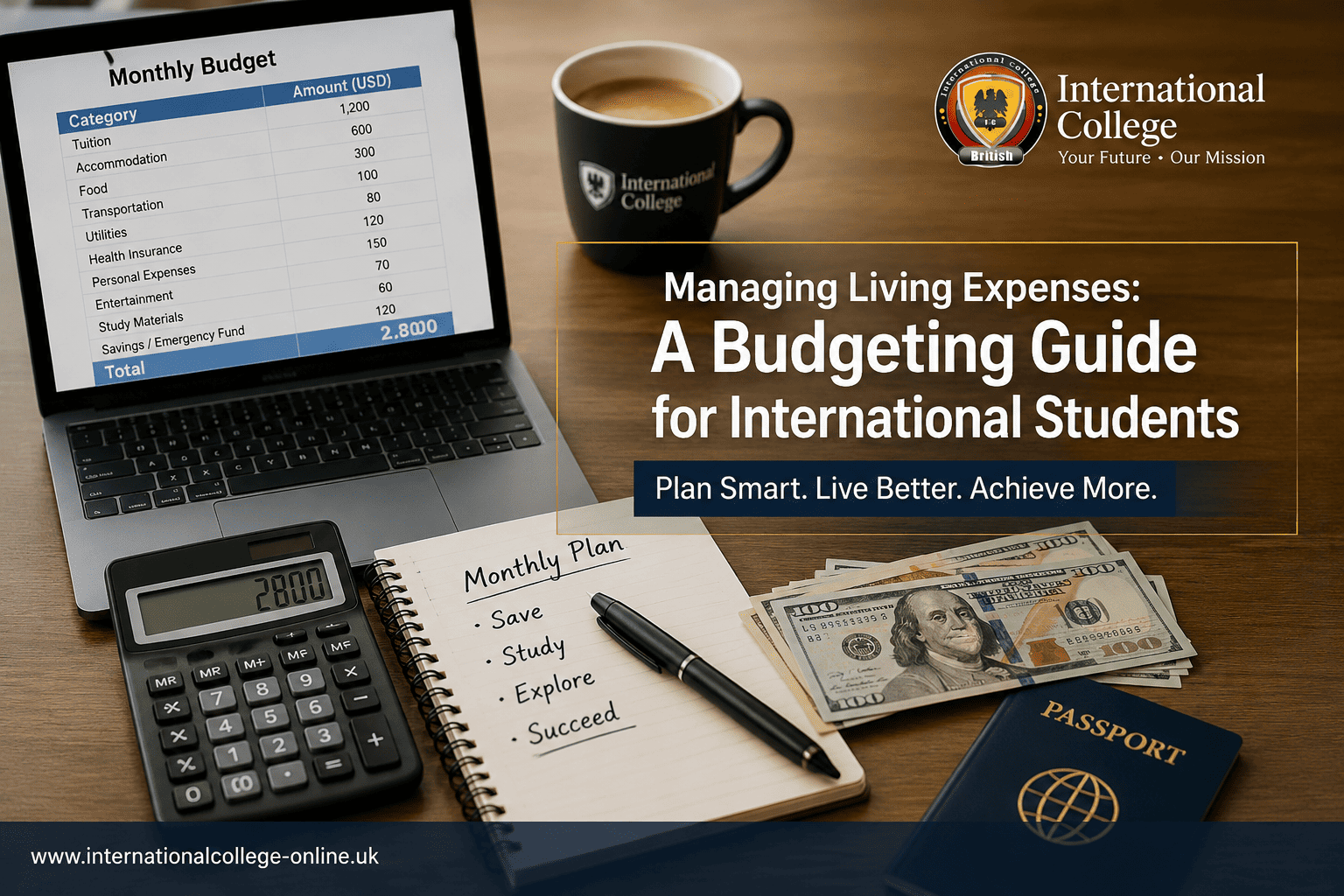
Optimizing an international student budget GCC requires isolating fixed tuition costs from variable college living expenses MENA. Effective student budgeting mandates a structured allocation model prioritizing essential accommodation, transportation logistics, and a localized emergency fund. Executing these practical financial planning steps establishes immediate financial security and prevents academic disruption caused by regional currency fluctuations or unexpected operational costs.
Relocating for higher education demands a rigorous financial architecture. Expatriate students must construct a budget that accounts for both the macro-economic reality of the host nation and the micro-economic variables of daily campus life. Failing to separate institutional billing from day-to-day capital requirements leads to rapid capital depletion.
The foundational error in international financial planning is conflating tuition infrastructure with living overhead. Your financial blueprint must delineate these two categories sharply.
Fixed Institutional Costs: Tuition, mandatory technology fees, library access, and institutional health insurance.
Variable Operational Costs: Off-campus housing, utility inflation, localized groceries, and regional transit passes.
Addressing college living expenses MENA requires localized data. The Gulf Cooperation Council (GCC) presents a unique economic environment characterized by high-standard infrastructure and varying consumer price indices.
Accommodation and Utilities
Housing dictates the majority of your capital outflow. Securing sustainable accommodation necessitates balancing proximity to the academic institution with the premium costs of urban centers.
Comparative Housing Analysis
|
Housing Model |
Cost Predictability |
Privacy |
Financial Risk Factor |
|
On-Campus Dormitories |
High (Flat rate per semester) |
Low to Medium |
Low (Utilities included) |
|
Private Off-Campus Studio |
Low (Market dependent) |
High |
High (Hidden utility fees) |
|
Shared Expatriate Housing |
Medium |
Medium |
Medium (Reliant on co-tenants) |
Transportation and Logistics
Mobility within the GCC relies heavily on localized infrastructure. While public transit networks like the Dubai Metro or Riyadh Bus are expanding rapidly, many students default to ride-sharing applications.
Procure Student Transit Cards: Immediately leverage university credentials to unlock municipal transport discounts.
Audit Ride-Sharing Expenditure: Cap monthly allowances for Uber, Careem, or localized taxi services to prevent variable cost spikes.
Evaluate Proximity ROI: Paying a 15% premium for housing within walking distance of the campus often yields a higher net return by eliminating daily transit costs.
Transitioning from theoretical planning to daily execution requires a definitive framework. Adopting a strict allocation methodology ensures capital preservation across the academic semester.
Standard student budgeting models must be recalibrated for the international context. Allocate your available monthly capital using the following strict parameters:
50% - Core Survival (Non-Negotiable): Rent, baseline groceries, required medications, and mandatory academic supplies.
30% - Cultural & Academic Integration (Variable): Networking events, regional travel, dining, and professional association fees.
20% - Contingency & Exchange Mitigation (Reserved): Liquid capital held to offset sudden currency devaluation, emergency flights, or unexpected visa processing fees.
Institutions and financial partners prioritize candidates who demonstrate fiscal responsibility. Executing practical financial planning steps to establish brand trust ensures you remain in good standing with both university bursars and local regulatory bodies.
The GCC operates on currencies largely pegged to the US Dollar, but your home currency may experience high volatility.
Establish a Multi-Currency Account: Utilize digital banking platforms to lock in favorable exchange rates before the semester begins.
Maintain a Minimum Liquidity Floor: Always hold three months of baseline living expenses in a highly liquid, localized bank account.
Audit Monthly: Conduct a mandatory end-of-month review to reconcile projected expenses against actual capital outflow.
Take Control of Your Academic Financial Future
Do not leave your international education to financial chance. [Download Our Comprehensive 2026 GCC Student Budget Calculator] today to map your exact projected costs and secure your fiscal foundation before the fall semester begins.
It is considered one of the largest universities, as it has more than 65 accredited training programs. The student in the program obtains internationally accredited certificates and is certified by the study embassy What distinguishes our university from other universities in Britain is the large number of accreditations it enjoys, which makes it at the forefront of international universities that organize professional programs. It is a member of the UK Register of Centers for Education Providers (UKRLP) Search with registration number 10065749. It is also a member of the list of accredited non-governmental organizations of the Economic and Social Council of the United Nations, and also a registered member of the European Union's Transparency Register under the number TR-Q-2017-22003.

internationalcollege-online