
Leadership and Innovation
Degrees

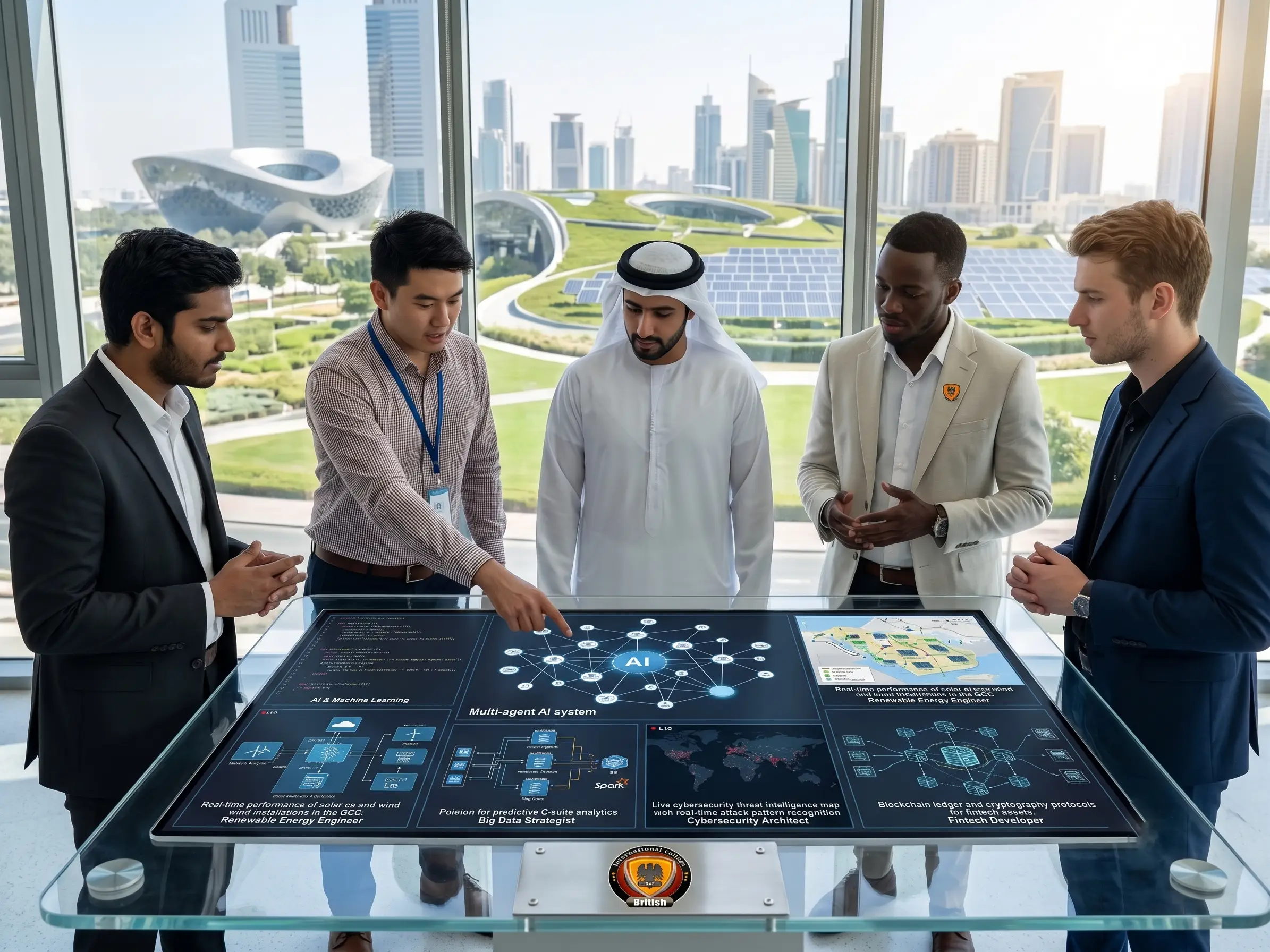
The technological baseline is shifting from basic digitization to agentic AI and sustainable infrastructure. According to current macro-economic projections, structural labor-market transformations will create 170 million new roles globally by the end of the decade, offsetting 92 million displaced positions. This represents a net growth of 78 million jobs, fundamentally altering what constitutes the best tech degrees MENA institutions can offer.
For international graduates preparing to enter the workforce, specialized technical literacy is no longer optional—it is the baseline. The convergence of algorithmic intelligence and the green transition means capital is flowing aggressively toward sectors that optimize operational efficiency and secure digital assets.
Market demand strictly favors candidates who can translate computational models into tangible business value. Below is the technical breakdown of the most critical future roles:
|
Career Path |
Core Technical Competencies |
Strategic 2030 Market Driver |
|
1. AI & Machine Learning Specialist |
Neural network architecture, algorithmic optimization, Python |
70% spike in enterprise demand for AI literacy; transition to agentic AI workflows. |
|
2. Renewable Energy Engineer |
Smart grid integration, photovoltaic innovation, sustainable materials |
Regional green transitions and massive decarbonization megaprojects driving future jobs GCC. |
|
3. Big Data Strategist |
Distributed systems (Hadoop, Spark), statistical modeling, ETL pipelines |
Exponential expansion of data generation requiring predictive analytics for C-suite decisions. |
|
4. Cybersecurity Architect |
Cloud security, zero-trust frameworks, threat intelligence |
Increased frequency of state-sponsored and automated AI cyber-attacks on enterprise infrastructure. |
|
5. Fintech Developer |
Blockchain protocols, algorithmic trading platforms, cryptography |
Complete digitization of global banking networks and decentralized finance asset management. |
Possessing theoretical knowledge is insufficient for the 2030 landscape. Employers require documented deployment capabilities. As organizations optimize their operations, the distinction between a standard IT degree and the best tech degrees MENA lies in practical, cross-functional application.
For instance, consider an international graduate named Marcus entering the regional tech market—rather than strictly mastering Python syntax, his competitive advantage stems from deploying AI models that explicitly reduce supply chain latency. This operational application of technology is exactly what secures executive buy-in and leadership trajectory.
To future-proof your academic and professional trajectory, integrate these core capabilities into your portfolio:
Systems Architecture and Integration: The ability to merge disparate tech stacks (e.g., integrating machine learning models into legacy financial platforms seamlessly).
Data Governance and Compliance: Understanding the legal frameworks surrounding data sovereignty, which is especially critical within localized GCC regulatory environments.
Analytical Thinking and Resilience: Recognized by the World Economic Forum as the most crucial human-centric skills. Organizations need professionals with the capacity to adapt strategies when algorithms fail or markets shift.
Cross-Disciplinary Literacy: Pairing secondary skills with primary technical knowledge—such as combining software engineering with environmental science for green tech roles.
Strategic market positioning requires immediate action. Evaluate your current curriculum against these 2030 projections and recalibrate your academic focus to match incoming market deficits.
Explore our advanced technology degree programs and secure your strategic consultation today to build your future-proof roadmap.
It is considered one of the largest universities, as it has more than 65 accredited training programs. The student in the program obtains internationally accredited certificates and is certified by the study embassy What distinguishes our university from other universities in Britain is the large number of accreditations it enjoys, which makes it at the forefront of international universities that organize professional programs. It is a member of the UK Register of Centers for Education Providers (UKRLP) Search with registration number 10065749. It is also a member of the list of accredited non-governmental organizations of the Economic and Social Council of the United Nations, and also a registered member of the European Union's Transparency Register under the number TR-Q-2017-22003.
internationalcollege-online