
Leadership and Innovation
Degrees

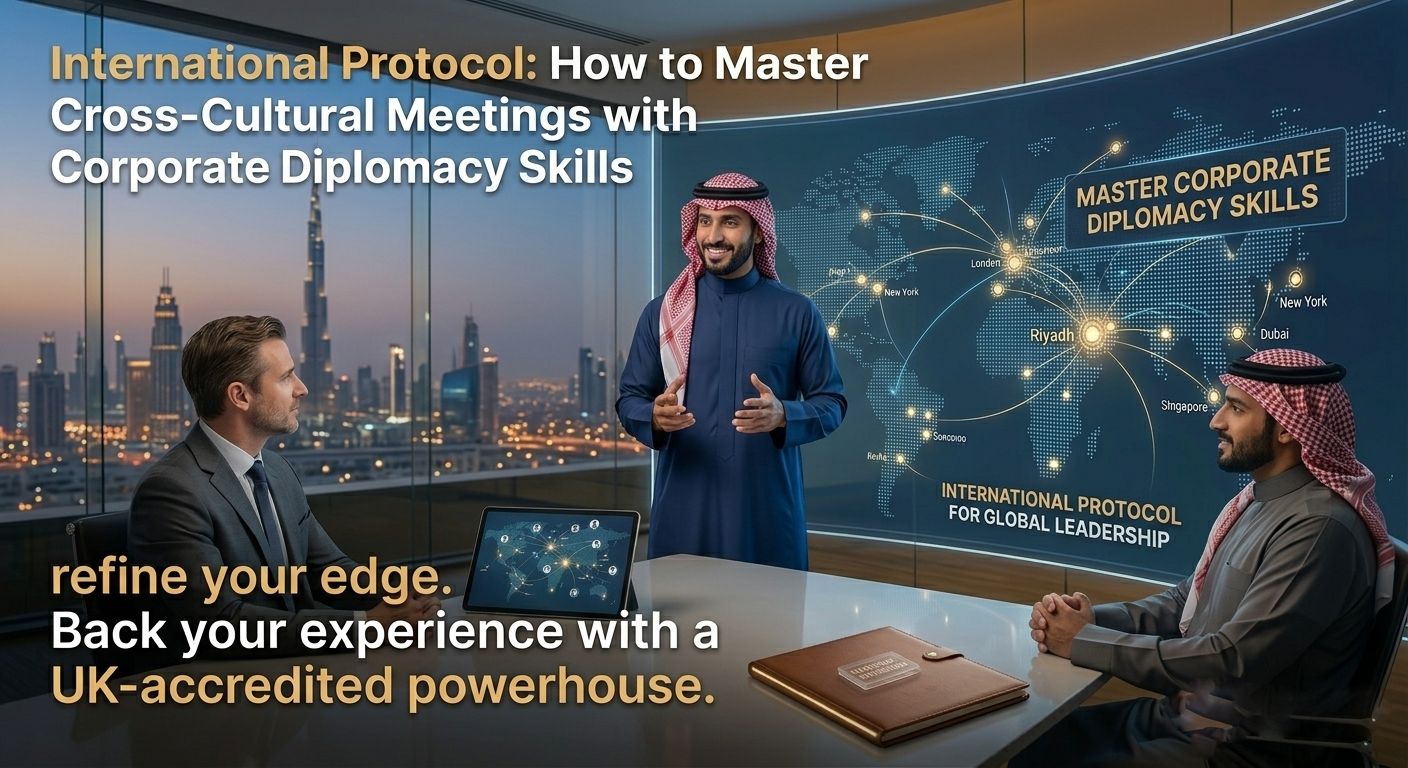
In the high-stakes boardrooms of Riyadh and Dubai, a single misplaced gesture or a misunderstood silence can cost more than just a deal—it can derail a career. For many Arab professionals, the "Deep Fear" isn't a lack of technical expertise; it’s the invisible barrier of cultural nuance. You’ve mastered the data, you’ve led the teams, but when you sit across from global partners, do you feel a subtle disconnect? This fear of "social stagnation"—the inability to break into the elite global management tier because you lack the polished corporate diplomacy skills of your international counterparts—is a silent career killer.
Furthermore, in an era of digital credentials, there is the added anxiety of the "Trust Gap." How do you prove your leadership expertise is backed by a recognized, world-class institution rather than an unverified online course?
At International College, we provide the bridge. We don't just teach management theory; we equip you with the executive communication skills needed to navigate the complexities of international protocol, all while backed by a prestigious UK education that is globally verified.
As we move toward 2026, the global business landscape is no longer just about transactions; it’s about relationships. With the acceleration of AI and Digital Transformation, technical tasks are being automated, leaving the "human element" as the primary differentiator for leadership. In the context of Saudi Vision 2030 and Dubai 2033, managers are increasingly acting as diplomats between local values and global standards.
True leadership in a global firm requires more than just speaking the language; it’s about understanding the "subtext." Whether it’s a high-level international business negotiation or a casual networking event at a consulate, your ability to read the room determines your influence. Mastering these skills ensures you are not just an "employee" but a "representative" of your organization’s highest ambitions.
Negotiation is often where the cultural divide is most apparent. What is seen as "directness" in London might be perceived as "aggressiveness" in Riyadh. Conversely, a focus on "relationship building" in the UAE might be seen as "time-wasting" by a US-based partner. Bridging these gaps requires a deep understanding of international protocol—the set of rules that govern high-level professional interactions.
In the Middle East EdTech market, credibility is everything. You cannot be a diplomatic leader if your credentials are under question. At International College, we solve the "Trust Gap" by ensuring your education is as ironclad as your professional conduct:
UKRLP Registration (10065749): We are officially registered on the UK Register of Learning Providers. This is your primary guarantee that your learning journey is recognized by the British educational framework.
Embassy Attestation: We understand that for a professional in the KSA or UAE, a degree is only as good as its legalization. Our certificates are eligible for UK Embassy Attestation, facilitating the crucial MOFA (Ministry of Foreign Affairs) recognition needed for local career advancement.
Local Recognition Capabilities: Our curriculum is designed to align with the standards of major regional entities, ensuring that your transition from middle management to executive leadership is supported by a degree that "opens doors."
The application of corporate diplomacy skills extends beyond the boardroom—it applies to your own career trajectory.
One of the most underutilized diplomatic tools is the ability to negotiate your own worth. When you approach a salary review, you aren't just asking for money; you are presenting a value proposition.
Data-Driven Diplomacy: Use your academic projects and real-world results to prove ROI.
The Global Benchmark: Position your UK-accredited degree as a global standard that warrants a global-scale salary.
Communication Style: Use the very executive communication skills you’ve learned to turn a "demand" into a "partnership discussion."
The mega-projects of the GCC are multi-national by nature. Managing a team that includes experts from five different continents requires a level of "Cross-Cultural Intelligence" that traditional MBAs often overlook. By specializing in International Relations and Global Management with us, you learn to:
Navigate the protocol of multi-lateral meetings.
Manage "Corporate Image" across different digital and physical landscapes.
Handle sensitive diplomatic crises within a business context.
The world is watching the Middle East. As the region becomes the new center for global business, the demand for "Diplomatic Managers" is skyrocketing. Relying on experience alone is a risk; backing that experience with a UK-accredited degree and mastered corporate diplomacy skills is a strategy.
March is the month to refine your edge. Don't let a lack of protocol keep you from the C-suite. Step into the role you were meant for with the confidence of a globally recognized leader.
Do you have the profile of a Global Leader?
Want to ensure your degree carries weight?
International College of Economics and Political Science (ICEPS) is an online education provider focused on professional learning, executive development, and career advancement. Our programmes are delivered online.
internationalcollege-online