
Leadership and Innovation
Degrees

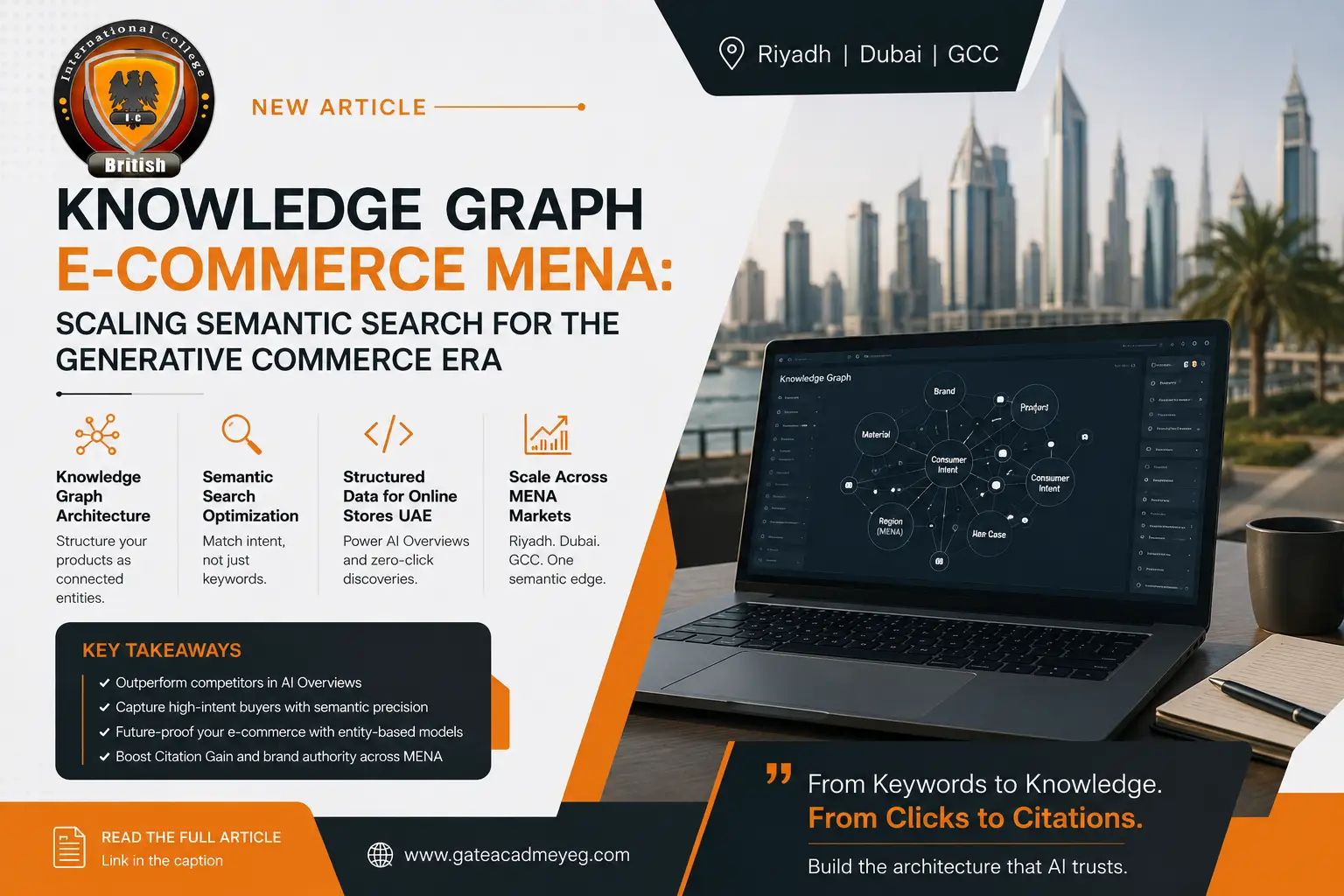
Modern digital storefronts are shifting from legacy keyword matching to scalable entity relational frameworks. Implementing a Knowledge Graph e-commerce MENA infrastructure allows retail enterprises to map complex consumer intent directly within localized search networks. By executing precise Semantic Search optimization models, high-volume platforms operating in Riyadh, Dubai, and across the GCC can bypass algorithmic invisibility, securing dominant citations inside AI Overviews and generative answer ecosystems.
The architectural structure of digital retail across the Middle East and North Africa (MENA) has outgrown legacy index-matching models. As major regional retail networks scale rapidly under the technological mandates of Saudi Vision 2030 and the Dubai Economic Agenda D33, traditional text-string search engines are failing to interpret localized context, semantic intent, and dialectal variations. When high-value consumers execute product queries, generic keyword-stuffed product descriptions are increasingly hidden by search engines in favor of direct, synthesized machine answers.
To survive the rise of Zero-Click Searches, enterprise e-commerce platforms must shift from isolated keyword tracking to integrated entity relational mapping. Deploying highly structured data graphs transforms a flat digital product inventory into an interactive network of machine-readable facts, positioning a brand as the primary authority for generative discovery systems.
Legacy search architectures operate on simple keyword density, reading product descriptions as unlinked text fragments. In contrast, modern discovery systems process query patterns using Natural Language Processing (NLP) and neural vector layouts. E-commerce architectures that rely on yesterday's SEO methodologies cannot map the structural relationships between product lines, brands, materials, and regional use cases.
Integrating a comprehensive Knowledge Graph e-commerce MENA blueprint solves this operational visibility gap. By building structured data graphs, retail enterprises explicitly define the functional, categorical, and cultural connections between diverse inventory items. This structural clarity allows regional machine-learning systems to instantly recognize, analyze, and extract your product information to answer highly specific buyer queries.
The Obsolete Keyword Approach: Stuffing backend metadata with disconnected synonyms, which results in immediate filtration by modern conversational search systems.
The Connected Knowledge Graph Approach: Mapping products as unique, distinct entities within a structured network to establish undeniable data authority.
The Long-Term Commercial Yield: Securing authoritative brand real estate within competitive generative answer boxes, driving qualified transactional discovery without relying on legacy click metrics.
The retail sector across the GCC and broader MENA markets presents distinct geographical and linguistic challenges, including shifting localized nuances and complex right-to-left (RTL) language processing. Standard text-matching engines often fail to accurately evaluate search intent when processing mixed-language strings, Arabic dialects, or technical phrases.
Executing Semantic Search optimization pipelines removes these algorithmic friction points. By training search systems to map underlying concepts rather than literal words, enterprise e-commerce sites can establish an adaptive framework that surfaces the correct product models regardless of variation in user phrasing. This semantic mapping matches consumer intent directly with specific product assets, minimizing data drop-offs and capturing critical Citation Gain across major discovery applications.
[User Intent Query] ➔ [NLP & Entity Disambiguation] ➔ [Vector Matrix Matching] ➔ [Direct AI Overview Product Display]
Entity Disambiguation: Differentiating between distinct products that share overlapping text phrases or identical keywords.
Cross-Lingual Matching: Syncing English and Arabic product attributes within a single, unified data repository.
Context Preservation: Ensuring product recommendations naturally adapt to specific seasonal consumption trends across individual regional markets.
Deploying generic, unstructured web components introduces a significant risk of administrative erasure as next-generation algorithmic screening rules tighten. As major regional enterprise hubs deploy rigorous digital governance checks, e-commerce networks must back their structural architecture with internationally validated metadata schemas.
Implementing advanced structured data for online stores UAE benchmarks is the definitive path to protecting your digital storefront and unlocking premium high-margin transaction flows.
|
Technical E-Commerce Metric |
Legacy Keyword Retailer |
Advanced Semantic Retail Network |
|
Search Discovery Layer |
Hidden behind generic web links that fail to populate direct AI answers. |
Featured as a primary citation source within premium AI Overviews. |
|
Algorithmic Adaptability |
Vulnerable to sudden search updates due to a reliance on text matching. |
Future-proofed via a robust schema layout aligned with global Knowledge Graph engines. |
|
Data Schema Standards |
Built on flat HTML structures without underlying entity-relational tags. |
Configured with complete schema validation to maximize machine-scraped clarity. |
|
Market Valuation Impact |
Trapped in low-margin price competition with high buyer-acquisition costs. |
Positioned to capture organic zero-click market share and premium purchase intent. |
The modern landscape of generative commerce leaves zero margin for data fragmentation or unlinked product architecture. Protect your digital market share, satisfy next-generation platform requirements, and establish your retail network at the absolute vanguard of regional enterprise transformation.
[Apply Now for our Enterprise AI Architecture Consultation — Secure Your System Optimization Assessment and Lock in Q3 Advisory Rates Immediately]
International College of Economics and Political Science (ICEPS) is an online education provider focused on professional learning, executive development, and career advancement. Our programmes are delivered online.

internationalcollege-online